
First: steam or hot water?
Your system type changes what to check.
- Steam boiler: has a glass sight tube showing water level on the side, and a pressure gauge that reads in low numbers, often under 2 psi. Radiators are usually cast iron, one pipe or two.
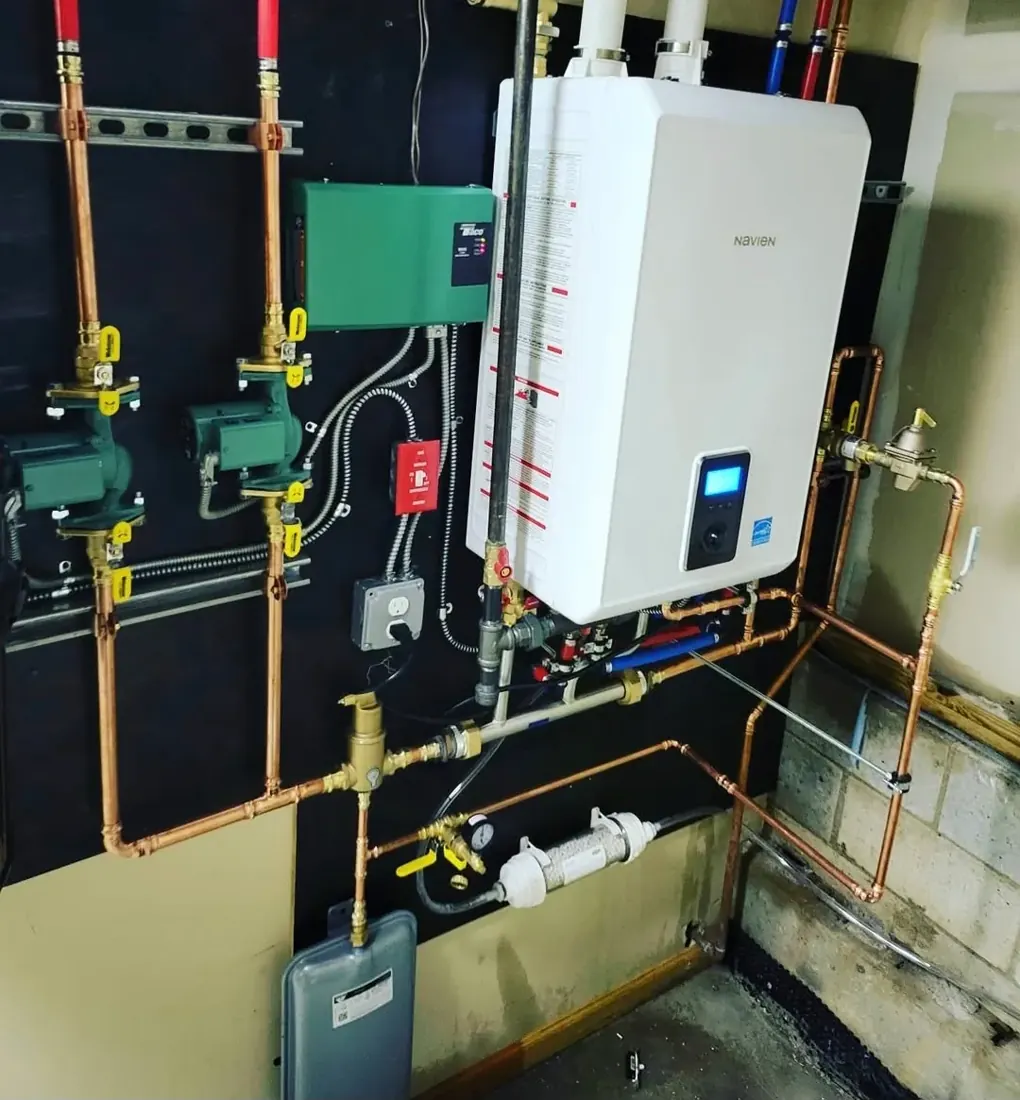
- Hot-water boiler: has a gauge showing temperature and pressure together, usually around 12 to 20 psi when cold. You'll see one or more circulator pumps and often baseboard heat.
The 8-point checklist
- Thermostat. Make sure it's set to "Heat" and a few degrees above room temperature. Replace the batteries if it has them; a blank screen is a common cause.
- Boiler power switch. There's usually a red switch plate at the top of the basement stairs or near the boiler. It looks like a light switch and gets flipped by accident. Make sure it's on.
- Breaker. Check the panel for a tripped breaker labeled boiler or burner.
- Gas valve. The handle on the gas line to the boiler should be parallel to the pipe (open).
- Steam: water level. The sight glass should be about half to two-thirds full. If it's empty and the boiler is cold, the low-water cutoff has shut it down. If the boiler is hot and dry, don't add water; turn it off and call.
- Hot water: pressure. If the gauge reads below about 12 psi cold, the system may be low on water, which can shut it off. A steadily dripping relief valve points to the opposite problem: too much pressure.
- Reset button. Many burners have a reset button on the control. Press it once. If it locks out again, stop. Repeated resets can flood the chamber with fuel.
- Error code. Modern boilers show a code on the display. Write it down. It tells the technician a lot before arriving.
When some rooms are cold
Steam: A radiator that stays cold while others heat usually has a stuck air vent. A radiator that heats only partway may have the wrong vent size or be tilted wrong. Banging usually means trapped water in a pipe or radiator that has lost its slope.
Hot water: Cold baseboard often means air in the line, a failed zone valve, or a stuck circulator. Gurgling sounds point to air.
When to call immediately
- Gas smell
- Water pouring or spraying from the boiler or pipes
- A steam boiler that's hot with an empty sight glass
- Relief valve discharging continuously
- Soot, scorching or a yellow, lazy flame
- Carbon monoxide alarm sounding (leave the house and call 911)
- No heat in freezing weather with no obvious cause
Keep pipes from freezing while you wait
Open cabinet doors under sinks on exterior walls, let a faucet drip, close off unused rooms, and use space heaters safely, kept well away from anything flammable and never left unattended.
Preventing the next no-heat night
- Annual boiler service before heating season
- On steam systems, flush the low-water cutoff as the manufacturer recommends
- On hot-water systems, check the expansion tank and pressure
- Replace failing radiator vents before winter
For boiler repair and replacement in Clifton, see our boiler service.
Frequently asked questions
Why is my boiler not working but has power?
Common causes are a tripped low-water cutoff on steam boilers, low pressure on hot-water systems, a failed igniter or flame sensor, or a safety lockout. Write down any error code and call a technician if one reset doesn't fix it.
How do I reset my boiler?
Press the reset button on the burner control once. If the boiler locks out again, don't keep pressing it, because repeated resets can cause unsafe conditions. Call a licensed technician.
What should the pressure be on my boiler?
Hot-water boilers typically read about 12 to 20 psi when cold, depending on the home. Steam boilers run at low pressure, usually under 2 psi. Check your boiler's manual for its specific range.
Can I add water to my steam boiler?
Only when the boiler is cool and the manufacturer's instructions allow it. Never add water to a hot boiler with an empty sight glass, because cold water can crack the cast iron.
Why are some radiators cold and others hot?
On steam systems, a stuck or wrong-size radiator vent is the most common cause. On hot-water systems, air in the line, a failed zone valve or a stuck circulator is usually to blame.
Is no heat an emergency?
In freezing weather, yes, especially with young children, older adults or anyone with health concerns in the home, and because pipes can freeze within hours.
How often should a boiler be serviced?
Once a year, ideally before the heating season starts. Annual service catches failing parts, checks safety controls and keeps efficiency up.
Keep reading
- Previous guide: Do You Need a Permit to Replace a Water Heater in Clifton, NJ?
- Next guide: How Much Does an Emergency Plumber Cost in Clifton, NJ?
- Need it fixed? See our boiler repair & replacement service in Clifton.